
Italy
The story
Postwar Italy was dominated by three parties — Christian Democrats (DC), Socialists (PSI) and Communists (PCI). In the 1984 European election the PCI won 33.3%, narrowly overtaking DC to become the largest party in a nationwide Italian election for the first time. The party's mainstream later merged into today's Democratic Party (PD); its radical remnant, the Communist Refoundation Party, has dwindled since 2006.
1946–2009 · The MSI's long road to respectability
The Italian Social Movement (MSI), founded in Rome in 1946 to carry Mussolini's legacy forward, benefited from Italy never confronting its fascist past as thoroughly as Germany did. It evolved gradually in a post-fascist direction before becoming the national-conservative Alleanza Nazionale (AN) in 1994, which merged with Forza Italia into the People of Freedom in 2009 and retained the MSI's flame symbol throughout.
1989–2018 · Lega and the Five Star Movement
Lega Nord, formed in 1989 from northern regional parties around a secessionist "Padania" platform, transformed into a national anti-immigration party under Matteo Salvini from 2013, forging European alliances with the Dutch PVV and French FN. The Five Star Movement (M5S), founded by comedian Beppe Grillo in 2009 from years of "Vaffanculo Day" protest organising, became parliament's largest party in 2018 — M5S and Lega became the two dominant parliamentary parties, forming a government with Giuseppe Conte, a political outsider, as prime minister.
2012– · Brothers of Italy and Giorgia Meloni
Brothers of Italy (FdI), founded in 2012 by People of Freedom defectors and led by Giorgia Meloni since 2014, still uses the MSI/AN tricolour flame as its logo. Right-leaning economically and socially conservative, restricting legal recognition of children in same-sex families and opposing surrogacy, FdI has softened its EU criticism considerably since taking power in 2022, governing with Lega and Forza Italia.
Smaller radical parties
Forza Nuova and CasaPound both trace to 1990s–2000s neo-fascist milieus and have never exceeded a fraction of the vote. The openly fascist Fiamma Tricolore split from AN in 1995 and remains marginal.
2024- · MELONI IN POWER
Meloni’s Brothers of Italy (FdI) won 28.75 percent and 24 seats in the 2024 European election, up from 6.4 percent in 2019, while Lega fell to 9.0. Regional results were mixed. Her record on liberal democracy is ambiguous, with media and judicial tensions but working checks: voters rejected her judicial reform by about 54% to 46% in March 2026 and she accepted the defeat. Roberto Vannacci’s new Futuro Nazionale challenges her from the right. FdI moderated on the EU and NATO, not on migration.
EP elections
Lega moved through the Greens/Regionalists, liberal ELDR, and Independence & Democracy groups before co-founding Europe of Nations and Freedom in 2015, then Identity and Democracy in 2019 and Patriots for Europe in 2024. After the 2024 election, M5S's eight MEPs joined The Left group. FdI sits in ECR, where it is the largest national delegation. PCI was one of the EP's largest delegations through the 1980s, its far-left seat later passed to the PRC and, since 2014, to AET.
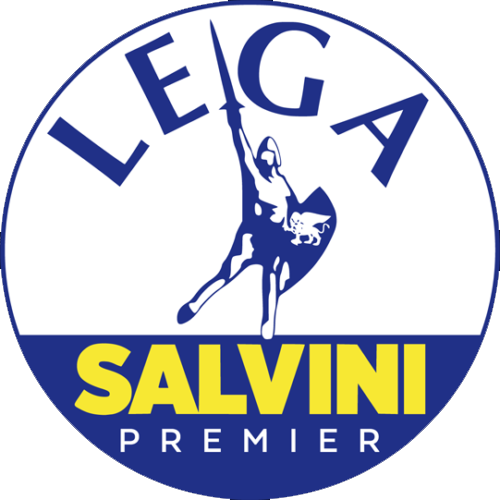
Lega
The League
- Economics Right
- Social issues Conservative
- EU Soft euroscepticism
- Authoritarianism Medium
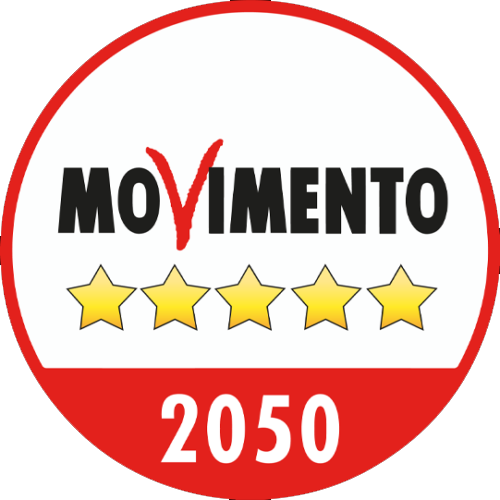
M5S
Five Star Movement
- Economics Left
- Social issues Moderate
- EU Soft euroscepticism
- Authoritarianism Medium
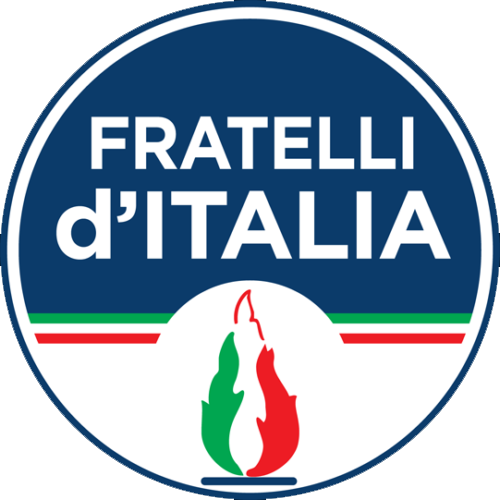
FdI
Brothers of Italy
- Economics Right
- Social issues Conservative
- EU Pro-European
- Authoritarianism Low