
Spain
The story
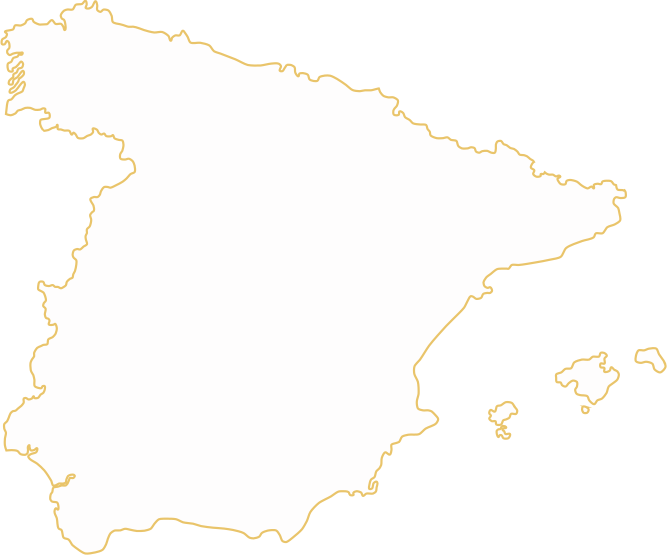
Since the transition to democracy after Franco's 1975 death, Spanish politics has been anchored by the socialist PSOE and conservative PP, but with an unusually crowded field of regional and radical parties alongside them — especially on the left, where broad electoral alliances are a longstanding tradition. The Communist Party (PCE), founded in 1921, was legalised in 1977 and took third place in the first democratic election; after adopting Eurocommunism it formed the United Left (IU) umbrella in 1986 and has run only within alliances since, even reintroducing Marxism-Leninism to its program as recently as 2017.
2014–2023 · Podemos and the new left
Podemos, founded in 2014 by Pablo Iglesias out of the anti-austerity protest movement, became — alongside Syriza in Greece — one of the decade's emblematic new populist-left parties, drawing early inspiration from Hugo Chávez. After the November 2019 election, Unidas Podemos entered a coalition with PSOE in January 2020, Spain's first with a party this far left. Iglesias left politics in 2021; successor Yolanda Díaz founded Sumar in 2022, a broader green-left platform that took 12 percent in 2023 before Podemos split off later that year, leaving Sumar, IU and PCE together in a PSOE-led government.
2013–2023 · Vox breaks a decades-long taboo
The far right nearly vanished after the dictatorship — Fuerza Nueva, the sole pro-Franco party, stayed marginal (2.1% in 1979 as Unión Nacional, 0.5% in 1982) and disappeared during the 1980s. Vox, a 2013 PP splinter led by Santiago Abascal since 2014, broke through with a 2018 Andalusia surprise and 15 percent nationally in 2019, before slipping to 12 percent in 2023. Strongly nationalist, socially conservative — anti-abortion, anti-feminist — mildly eurosceptic and economically right-leaning, Vox is fiercely centralist, opposing regional autonomy and separatism; it backed Trump in 2020 and at first refused to recognise Biden's victory until formal certification.
2024 - 2026 · SPAIN’S FRAGMENTED LEFT
In the 2024 European election, Sumar won 4.7 percent and three seats and Podemos 3.3 percent and two, showing how fragmented the alternative left is. Rebuilding a broader alliance failed through 2025-26, and Podemos pursues its own strategy.
2024-2026 · MIGRATION, VOX AND SALF
Migration has become central to Spanish politics as arrivals to the Canary Islands and the 2026 Ceuta crisis kept it in the national debate. Vox pushed the issue forward and the PP hardened its rhetoric. In July 2024 Vox left five regional PP governments over the redistribution of migrant minors, but cooperation largely continued, and Vox now demands immediate repatriation, deportation of convicted foreigners and “remigration”. Meanwhile, Alvise Pérez’s Se Acabó la Fiesta won 4.6 percent and three MEPs in 2024. It evolved from anti-system protest into a hard-eurosceptic, deportation-focused party, but it is unstable: two MEPs left Pérez, who faces judicial investigations.
EP elections
Spain has sent MEPs to the EP's radical-left group in every election since 1987. In 2024 Sumar won 4.7% and three seats and Podemos 3.3% and two. Vox first entered in 2019 and joined Patriots for Europe after the 2024 election, while SALF won 4.6% and three seats.
PCE
Communist Party of Spain
- Economics Left
- Social issues Progressive
- EU Soft euroscepticism
- Authoritarianism Medium
PODEMOS
We Can
- Economics Left
- Social issues Progressive
- EU Soft euroscepticism
- Authoritarianism Medium
VOX
Vox
- Economics Right
- Social issues Conservative
- EU Soft euroscepticism
- Authoritarianism Medium