
Romania
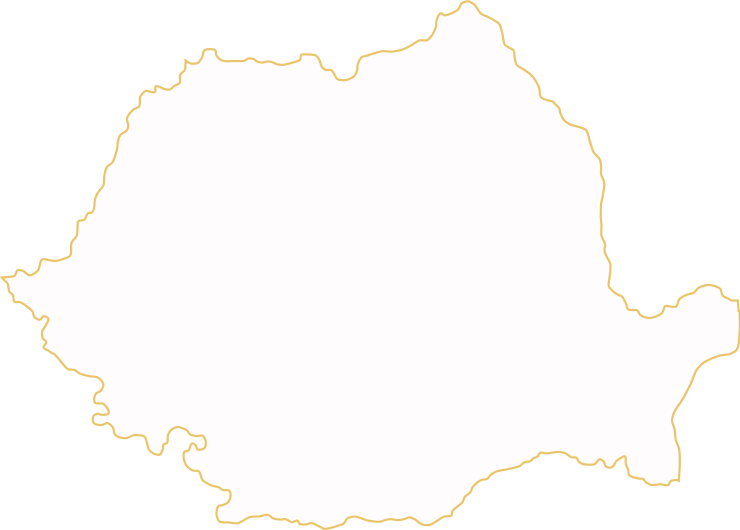
The story
Unlike the rest of the Warsaw Pact, Romania's communist regime fell through violent revolution in 1989, and the Communist Party was immediately banned. Many prominent communists regrouped in the National Salvation Front under Ion Iliescu, who won a landslide in the 1990 elections after a campaign marked by violence and heavy obstacles for the opposition.
The front splintered, and after the 1992 election Iliescu's successor party (later PSD) stayed in power with parliamentary support from three fringe parties: the communist PSM and the nationalist PUNR and PRM. PUNR held ministries from 1994 to 1996. Their radical nationalism strained relations with Hungary, Moldova and Yugoslavia, and the cooperation collapsed after Iliescu publicly compared the PRM and PUNR leaders to Russia's Vladimir Zhirinovsky.
Parties
PSD
The Social Democrats · left-wing populism · national conservatism
Best described as combining left-wing populism with national conservatism — a noticeable continuity with the dictatorship's blend of communism and nationalism. Repeatedly criticised for corruption and attacks on the rule of law: former leader Liviu Dragnea was convicted, attempts were made to decriminalise corruption, and the party was suspended from its European Parliament group in 2019 over its democratic credibility.
PUNR
Romanian National Unity Party · 1990–2000 in parliament
Led by Gheorghe Funar, notorious as the nationalist mayor of Cluj — tricolour-painted street furniture, renamed statues, and open discrimination against Hungarians and Roma. Took seven per cent in 1992, entered the governing coalition in August 1994 and stayed until September 1996. Funar was expelled in 1997, joined PRM, and remained Cluj's mayor until 2004.
PRM
Greater Romania Party · 1991–2015 under Corneliu Vadim Tudor
Advocated an ethnic nationalism aimed at recreating interwar Greater Romania, including annexing Moldova, and campaigned to ban the Hungarian-dominated UDMR. Supported the government in parliament and joined the 'Red Quadrilateral' in early 1995, but held no cabinet posts and withdrew in October 1995. Its peak came in 2000, when Tudor finished second in the presidential election; it lost its seats in the national parliament in 2008 and its last MEPs in 2014.
PSM
Socialist Party of Labour · 1990–2003
A short-lived, de facto communist party. It entered parliament by a narrow margin in 1992 and gained some influence within the coalition, lost its seats in 1996, and dissolved in 2003.
The new radical right
2019-2024 · AUR AND THE ROMANIAN RADICAL RIGHT
The Alliance for the Union of Romanians (AUR), formed in autumn 2019, surprised many by entering parliament as the fourth-largest party in 2020, and almost doubled its support in 2024 to 18%, making it the second-largest party in parliament. Leader George Simion had campaigned for uniting Moldova and Romania, and the party's name alludes to reuniting all Romanians in a Greater Romania.
AUR is pro-NATO, favours energy self-sufficiency, sees Fidesz and PiS as role models, and sits with the ECR in the European Parliament. Its deputy leader comes from a movement for a traditional view of marriage, though the party does not oppose abortion. In 2022 Simion live-streamed his wedding on Facebook, inviting the whole population — traditional Romanian attire required.
Two further radical right parties entered parliament in 2024. S.O.S. Romania, founded in 2021 and led since 2022 by former AUR senator Diana Șoșoacă, is more radical than AUR — strongly eurosceptic, pro-Russian, and irredentist, with territorial claims on parts of Ukraine and Moldova. Șoșoacă was barred from the 2024 presidential election by the Constitutional Court, which found her positions incompatible with democracy and the rule of law.
The Party of Young People (POT), founded in 2023 by former AUR MP Anamaria Gavrilă, backed Călin Georgescu in the 2024 presidential election and entered parliament that year. It combines Romanian nationalism with strong social conservatism and Christian values, opposes abortion and same-sex marriage, and favours free-market policies. It is strongly eurosceptic and sovereigntist, yet supports the US partnership and NATO membership, arguing that Romanian interests should come first.
2024-2025 · GEORGESCU AND THE ANNULLED ELECTION
Călin Georgescu, an independent nationalist and former AUR member, unexpectedly won the first round of the 2024 presidential election, declaring “Romania is my party” and praising Putin. The Constitutional Court annulled the vote over alleged foreign interference and artificially amplified social media activity, a decision criticised by J.D. Vance. AUR’s George Simion then reached the 2025 runoff, promising to make Georgescu prime minister. He lost, claimed fraud without evidence, and kept questioning the result.
In spring 2026 PSD joined AUR in a successful no-confidence vote that brought down Ilie Bolojan's pro-European minority government, though PSD ruled out a coalition with AUR. Since 2024 AUR has consistently led national opinion polls.
EP elections
Romania joined the EU in 2007, its first MEPs chosen by parliament from the previous national results — giving PRM three seats and, together with Bulgaria's Ataka, a founding role in the short-lived ITS group. PRM lost its seats in the first Romanian EP elections in late 2007, returned with three in 2009 (including Tudor and Becali), and was voted out in 2014. Unusually for a nationalist party, PRM supported Romania's EU membership; its MEP Dumitru Zamfirescu, "the Yes Man," never voted against a single proposal.
After a ten-year gap, AUR (six seats, ECR) and S.O.S. Romania (two seats, non-inscrits) entered in 2024. S.O.S. Romania's bid to join the far-right Europe of Sovereign Nations group was rejected — Hungary's Our Homeland Movement would not accept an irredentist Romanian party.
PSD
Social Democratic Party
- Economics Left
- Social issues Conservative
- EU Pro-European
- Authoritarianism Medium
POT
Party of Young People
- Economics Right
- Social issues Conservative
- EU Hard euroscepticism
- Authoritarianism High
AUR
Alliance for the Union of Romanians
- Economics Centre
- Social issues Conservative
- EU Soft euroscepticism
- Authoritarianism High

SOS
S.O.S. Romania
- Economics Centre
- Social issues Conservative
- EU Hard euroscepticism
- Authoritarianism High